
🌍 Welcome to the Future of Community Living
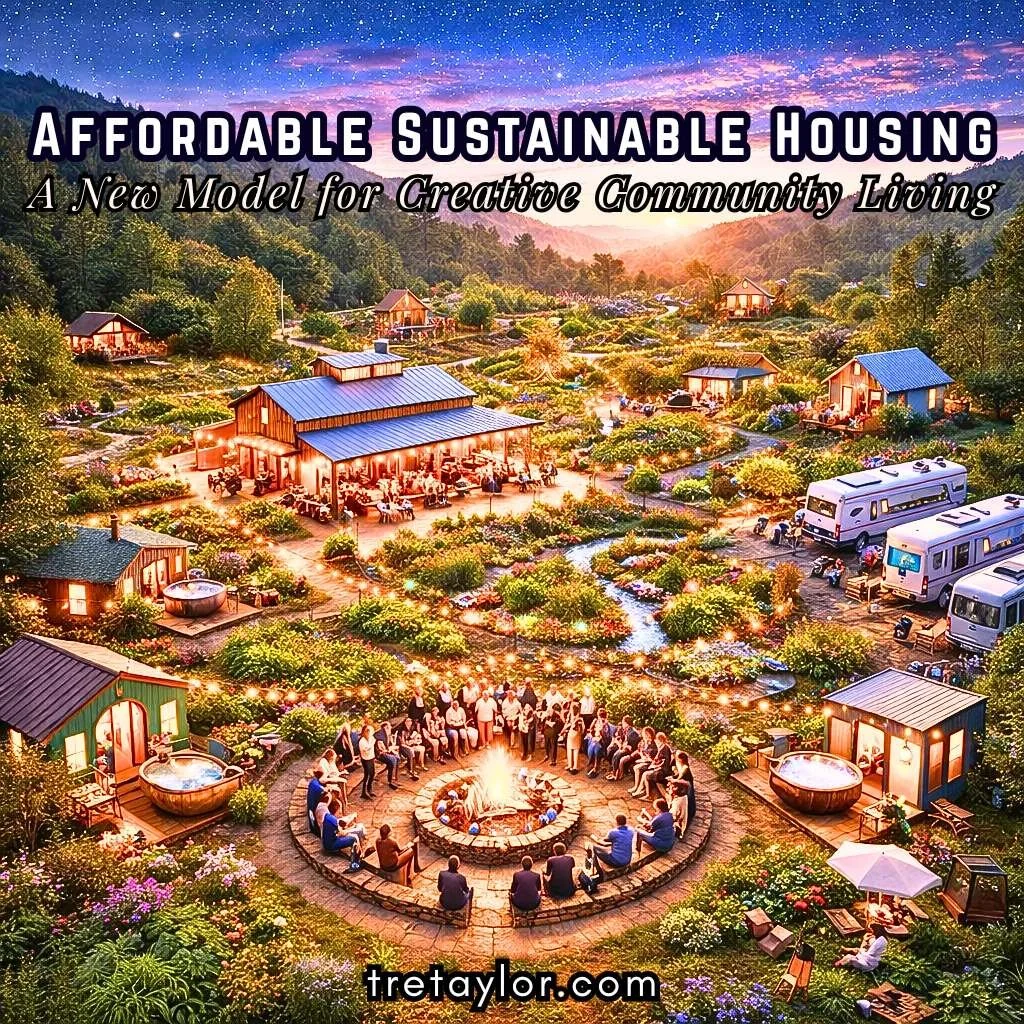
A visionary yet practical exploration of affordable, sustainable housing through tiny home villages and intentional communities. Tré Taylor introduces The Leopard Lodge Foundation—a scalable model for self-sustaining living, community support, and dignified housing solutions designed to address homelessness, land use challenges, and the future of human-centered living. https://www.tretaylor.com/
Dreaming a Better World on Purpose
Written by Tré Taylor and Bleep the Tattoo
Category: Confessions, Affordable self-sustainable intentional community housing models, To resolve housing crisis
“The opposite of homelessness is not housing—it is community.”
— Alan Graham, Community First! Village
🏡
✨I have never fit neatly inside the usual boxes.
Not politically.
Not religiously.
Not creatively.
Not psychologically.
And maybe that is exactly the point.
I am not here to repeat the world as it has been handed to me. I am here to imagine what else is possible.
That does not make me naïve. It makes me responsible.
Because if we are honest, the systems we have inherited are not working for far too many people. Too many children are neglected. Too many adults are surviving in states of exhaustion, trauma, confusion, and isolation. Too many gifted, sensitive, brilliant people have been made to feel broken simply because they were different.
I know that terrain well.
And I also know this: just because someone is different does not mean they are useless. It may mean they are carrying a new blueprint.
💬 Bleep the Tattoo says: “If the blueprint looks weird, good. Grey-Beige never changed the world.”
🔥 The World Is Changing, Whether We Like It or Not
We are living through a massive transition.
Technology is changing everything. Artificial intelligence is changing everything. The way we create, heal, communicate, learn, and organize community is changing. The old systems are trembling. The old lies are getting harder to hide. The old categories of left and right are starting to feel too small for what is actually happening.
Good.
Some things need to fall apart.
Some things should never have been normal.
What interests me is not endless outrage. I am not building a life around rage. I am interested in what comes after the collapse of illusion.
What do we build next?
How do we create a world that is more humane, more affordable, more beautiful, more conscious, more creative, and more honest?
That is the conversation I want to have.
💬 Bleep the Tattoo says: “I’m not saying the old system was broken, but if it were a toaster, it’d only toast the top 1% of the bread.”
🧠 Why Human Needs Matter
At the heart of this vision is a simple truth: people thrive when their basic human needs are met.
I believe that every human being has a natural birthright to have their needs met — not as a luxury, but as the foundation for a life worth living. That means a safe place to live, clean water to drink, healthy soil to grow nourishing food, and a supportive community where people can feel seen, valued, and connected.
When we understand what people actually need in order to heal, grow, and contribute, we can begin building villages and communities that support human dignity instead of constant survival mode.
🌿 A Foundation for Human Flourishing
When we look at frameworks like Maslow’s hierarchy of needs and Tony Robbins’ human needs model, something becomes very clear:
People do not thrive in isolation.
People do not thrive in chronic stress.
People do not thrive when every day is about survival.
People can’t make sound decisions when living in a constant state, of Fear, Scarcity and Separation.
People thrive in environments that balance:
safety with opportunity
belonging with individuality
stability with growth
rest with purpose
support with contribution
If we can create better villages, we can create better human outcomes.
🧠 Development, Environment & What’s Been Missing
We are entering a time where technology—especially artificial intelligence—is beginning to shift the way we work, create, and live. If used wisely, these tools can help carry the weight of repetitive tasks and open up more time for what makes us human: creativity, connection, healing, and purpose. It’s not about replacing people—it’s about supporting people.
As this evolves, we may begin to see new models of living emerge—where working less, creating more, and even forms of shared or universal income become part of the conversation. It may sound futuristic, but so did so many things we now take for granted. If we can imagine a world where people have more freedom to discover what they love and contribute in meaningful ways, then we also have to ask: how do we create the environments that make that possible for everyone?
One of the ideas that has shaped my thinking is how much environment influences human development—especially in the early stages of life. The first years of childhood help form our sense of safety, connection, and identity, but development doesn’t stop there. It continues through adolescence and into early adulthood, where we’re still learning who we are, what we’re capable of, and how to function in the world.
From my perspective, it’s really the first few decades of life that shape the foundation we build everything else on. And yet, most of us have never experienced what it’s like to grow up in an environment where our basic needs are consistently met—where there is enough safety, support, stability, and community to make healthy decisions from a grounded place rather than from stress or survival.
When those needs aren’t met, people don’t fail—they adapt. They do the best they can within systems that often leave them under-supported. But when those same needs are met—when people have stability, belonging, opportunity, and encouragement—something different happens. People make clearer choices. They grow into their strengths. They contribute in meaningful ways. This is why I believe the conversation around housing and community is so important. It’s not just about where people live—it’s about the environments that shape who they become.
For me, this is where models like Maslow’s hierarchy of needs and Tony Robbins’ human needs framework become incredibly relevant. They give us a language for understanding what humans actually require in order to thrive—not just survive. And if we can begin designing communities that support those needs from the beginning—and offer transitional support for those who didn’t have that foundation—we create the possibility for something different. Something more humane, more stable, and more aligned with how people are actually meant to live and grow.
🔍 Maslow’s Hierarchy of Needs
Maslow’s model reminds us that humans need more than shelter alone. We need layers of support that help us become fully alive.
🏠 Physiological Needs
Food, water, shelter, sleep, rest, physical survival
🔐 Safety Needs
Security, stability, health, protection, reliable structure
💞 Love and Belonging
Friendship, family, community, connection, emotional support
🌟 Esteem
Confidence, self-respect, dignity, recognition, purpose
🕊️ Self-Actualization
Growth, creativity, fulfillment, becoming who you were meant to be
✨ Optional Expanded View: Self-Transcendence
Service, contribution, spiritual meaning, helping something larger than yourself
⚖️ Tony Robbins’ 6 Human Needs
Tony Robbins expanded on this in a very practical way by describing six core human needs that influence how we live, choose, and relate.
🧱 Certainty
Safety, comfort, stability, predictability
🎢 Variety
Change, stimulation, surprise, adventure
💎 Significance
Feeling valued, important, respected, needed
❤️ Love and Connection
Belonging, intimacy, closeness, shared humanity
🌱 Growth
Learning, healing, evolving, expanding
🤲 Contribution
Giving back, serving others, making a difference
🏡 Why This Matters for Community Design
It takes more than a couple of exhausted adults and a fragmented economy to raise a healthy human being.
It takes a village.
It takes places where people are not just housed, but supported. Places where people can rest, contribute, garden, cook, create, make music, share resources, and rediscover their value. Places where people have enough breathing room to be themselves, and enough community to not feel abandoned.
That is one of the core ideas behind Leopard Lodge.
Not just shelter.
Not just survival.
But dignity, belonging, beauty, and real opportunity.
🌍 A Better Village Is Possible
I have spent years living on the road and have heard hundreds of stories from people doing their best to survive. What I have seen again and again is that most people do not need fixing — they need a real chance.
A little stability.
A little support.
A little love.
A little dignity.
A little room to breathe long enough to remember who they are.
With thoughtful design, shared resources, and community-centered models, we can build environments where people can heal, contribute, and rediscover purpose.
And the good news is: people are already doing versions of this.
The communities below are real-world examples of intentional villages, tiny home neighborhoods, and community-based housing models that prove we do not have to reinvent the wheel — we just have to build on what works.
📚 REAL-WORLD EXAMPLES(Credible References)
👉 “This is already happening—just not at scale yet.”
🏡 1. Opportunity Village – Eugene, Oregon
One of the most well-known tiny home communities for formerly homeless residents
Resident-governed, low-cost, community-based model
Includes shared kitchens, gardens, and support systems
“Community is the foundation of stability—housing alone is not enough.”
🌲 2. Emerald Village – Eugene, Oregon
Permanent tiny home village with cooperative ownership model
Residents pay affordable monthly fees (~$300–$500 range historically)
Includes gardens, workshops, and shared spaces
🏘️ 3. SquareOne Villages (Oregon Network)
Umbrella nonprofit creating multiple tiny home communities
Focus: democratic governance + affordability + dignity
🌿 4. Dignity Village – Portland, Oregon
One of the first self-governed homeless communities in the U.S.
Residents build and maintain their own structures
Demonstrates self-management + accountability model
🌄 5. Community First! Village – Austin, Texas
50+ acre master-planned community for formerly homeless individuals
Mix of tiny homes, RVs, shared spaces, and social enterprise
Includes art, music, gardens, and job opportunities
🧓 6. Silver Sage Village – Boulder, Colorado
Co-housing model for seniors (intentional community)
Private homes + shared common house
Focus on aging with dignity, connection, and autonomy
🌍 7. EcoVillage at Ithaca – New York
One of the most studied intentional eco-communities in the U.S.
Combines sustainability, shared resources, and social design
Strong data on reduced environmental impact + increased well-being
🧠 Studies on intentional communities and co-housing consistently show:
Lower cost of living through shared resources
Increased mental health and reduced isolation
Higher levels of civic engagement
Reduced environmental footprint
📊 Source (academic overview): 🔗 https://www.ic.org (Foundation for Intentional Community)
❓ Three Contemplative Questions
1. 🌍 If we were free to design a better society from scratch, what would we keep, what would we end, and what have we never seriously tried?
2. 🏡 What would your life look like if your basic needs were truly supported and your gifts were actually welcome?
3. 💫 What kind of community would help you become more honest, more creative, more peaceful, and more fully yourself?
🐆 The Leopard Lodge Foundation
This is one of the dreams in my heart.
I call it The Leopard Lodge Foundation.
It is part sanctuary, part creative village, part healing retreat, part community experiment, part practical model for a better way of living.
I imagine affordable tiny homes. RV spaces. Gardens. Beauty. Pie. Fire pits. Music. Workshops. Community meals. Neurodiverse support. Creative residencies. Storytelling. Practical resources. Real conversations.
I imagine a place that is both mystical and grounded. Visionary and useful. Tender and strong.
A place where people can remember that healing does not have to be sterile, punishing, or joyless.
A place where beauty itself is part of the medicine.
Grow this into self-sustainable, maintable creative villages, eco-farms, and affordable housing villages models that can be set up outside of every city that needs a lifeline. Something to manage as the world changes.
📣 A Public Call for Collaborators
So let me say this clearly:
I am calling in collaborators.
I am calling in board members.
I am calling in angel funders.
I am calling in practical visionaries.
I am looking for people who are financially capable, emotionally mature, strategically minded, and genuinely inspired to help create something that serves people in the real world.
If something in this speaks to you… trust that.
This isn’t just an idea—it’s the beginning of something real. And like all meaningful things, it will be built in collaboration, with the right people, at the right time.
I am actively looking to connect with:
potential partners
board members
land owners
investors and donors
creatives and builders
nonprofit and housing experts
and anyone who feels genuinely called to help bring this vision to life
If you see what I see—if you feel that pull toward building something more humane, more beautiful, and more sustainable—then I would love to hear from you.
🤝 Let’s Start the Conversation
This is the part where we begin.
If you feel aligned with this vision, please reach out and introduce yourself. Tell me who you are, what you do, and how you might want to contribute.
🌐 Website: tretaylor.com
📩 Contact: tretaylorconsulting@gmail.com
👉Go Fund Me - From Vanlife to Building Something Bigger
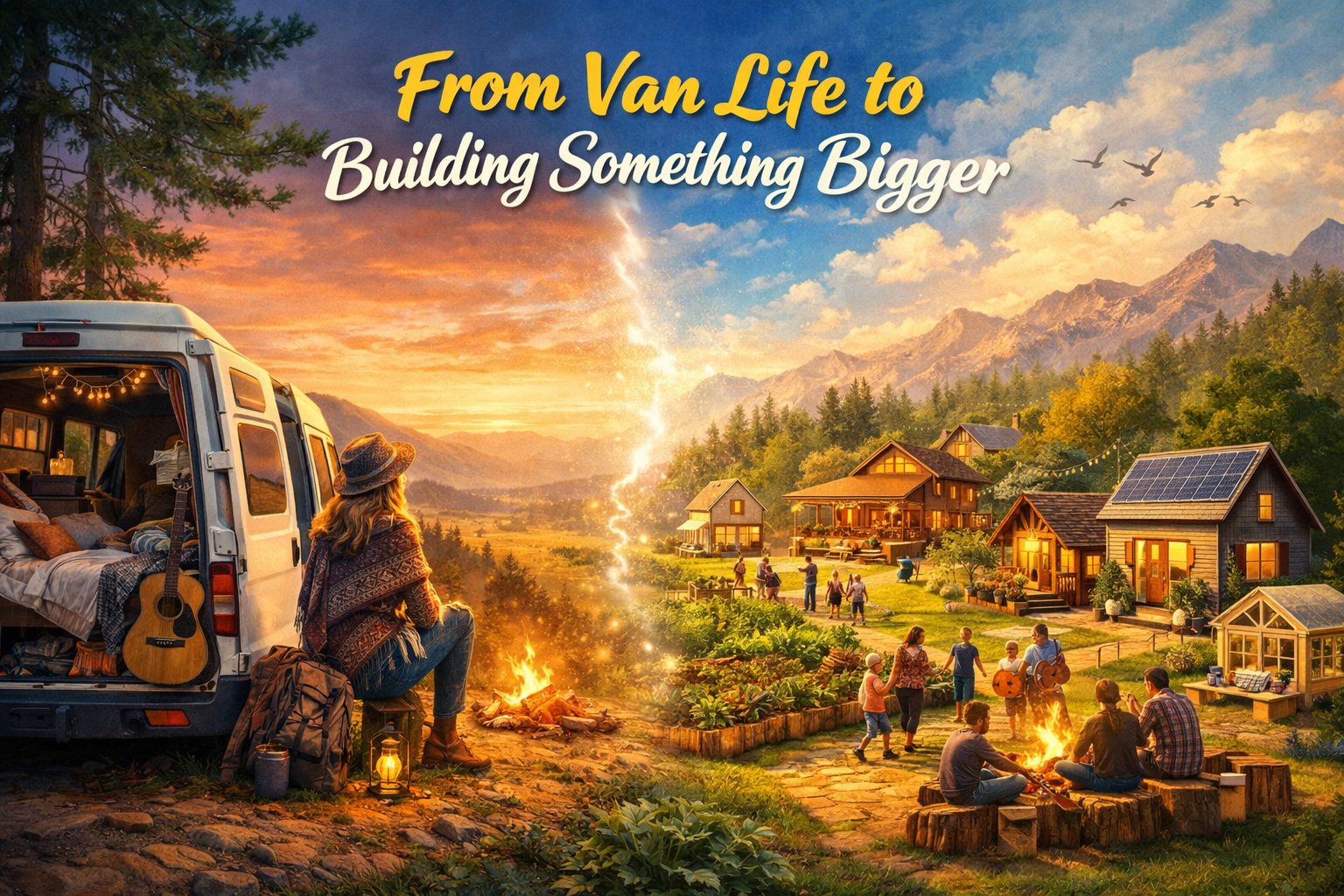
🐆 What Comes Next
As this grows, I will be sharing the developments:
The Leopard Lodge Foundation
Meeting and experiencing scalable village models firsthand
Sharing the journey on media platforms and podcasts
Collaborating with a network of creative, intentional communities, working with Tiny House Legislation and beyond
This will evolve into a larger initiative—but for now, it begins with conversation, connection, and courage.
💫 Final Invitation
If you’ve been waiting for a sign—this might be it.
Let’s build something beautiful.
