
🥣 Homemade Organic Chicken Bouillon Powder
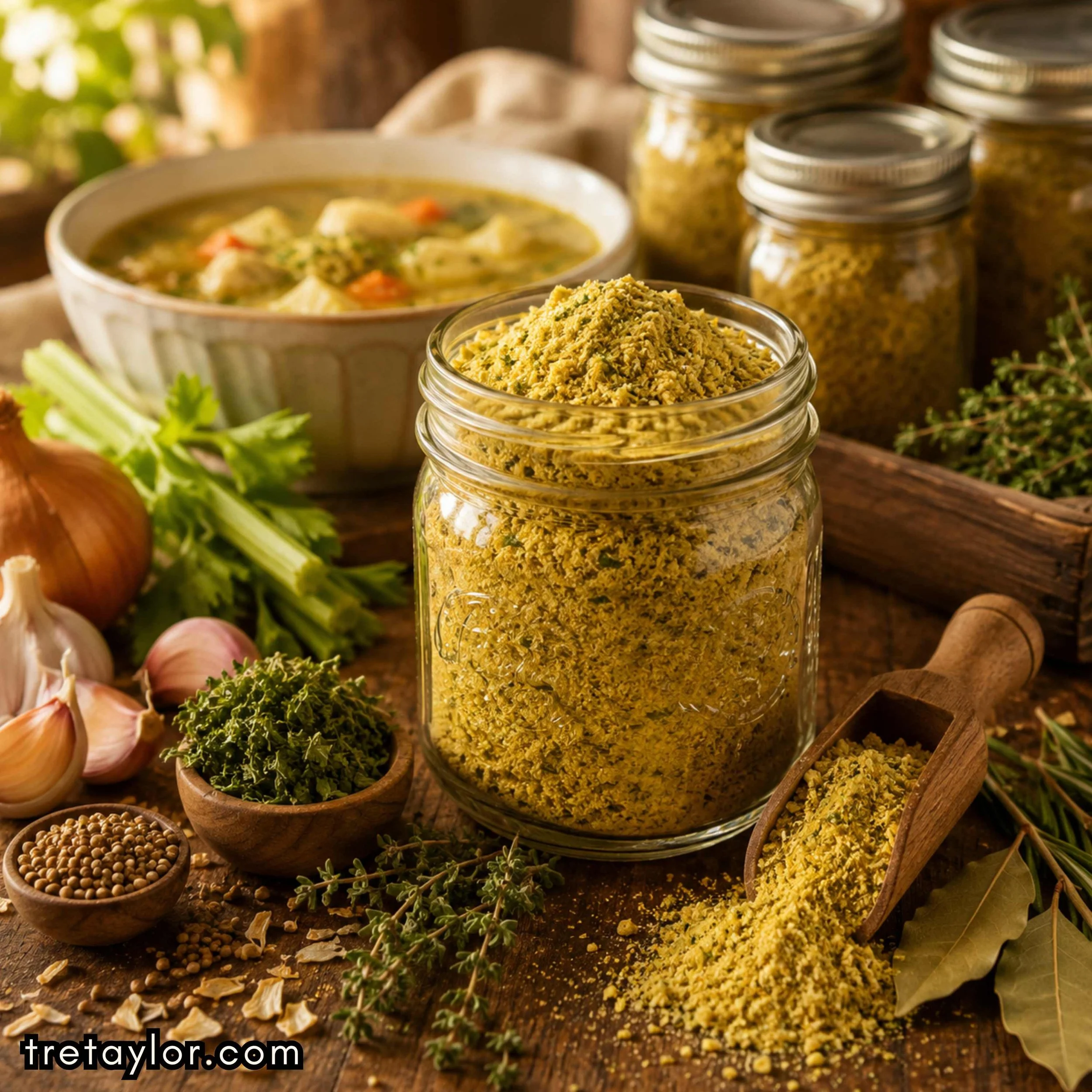
Learn how to make homemade chicken bouillon powder, a shelf-stable preparedness pantry essential perfect for emergency food storage, camping, RV living, van life, homesteading, and everyday cooking.
This easy DIY recipe transforms simple dried herbs and seasonings into a versatile broth base that stores for years and adds rich flavor to soups, rice, beans, vegetables, and family meals. Build a resilient pantry with this practical, budget-friendly staple from the Nomad Kitchen.
Visit Tré Taylor Nomad Kitchen for more preparedness recipes, food preservation ideas, and self-reliance inspiration.
Why a Preparedness Pantry Matters
There is an old saying that the best time to prepare is before you need to.
Most emergencies don't arrive with much warning. A winter storm, wildfire, extended power outage, supply chain disruption, unexpected job loss, or even a family evacuation can leave us relying on whatever we already have on hand. During those moments, having a well-stocked pantry isn't about fear—it's about peace of mind.
At Nomad Kitchen, preparedness means creating simple, nutritious foods that store well, travel well, and provide real comfort when life becomes uncertain. Whether you're living in a traditional home, traveling in an RV, embracing van life, or simply wanting to be better prepared for the unexpected, a few carefully chosen pantry staples can make all the difference.
Homemade Chicken Bouillon Powder is one of those staples.
Made from wholesome herbs, seasonings, and pantry ingredients you can recognize and trust, this flavorful powder transforms ordinary water into a rich broth that can be used to make soups, rice, beans, vegetables, gravies, and hearty one-pot meals. Unlike many commercial bouillons, you control the ingredients, the salt level, and the quality of everything that goes into the jar.
The beauty of this recipe is its simplicity. It takes only minutes to prepare, stores for months or even years when properly packaged, and occupies very little space. Yet when combined with a few basic ingredients like rice, lentils, pasta, or dehydrated vegetables, it becomes the foundation for countless nourishing meals.
Preparedness isn't about expecting the worst. It's about taking care of the people you love and creating a little extra security in an unpredictable world. From our Nomad Kitchen to yours, may this recipe bring warmth, comfort, and confidence to your pantry—whether you're weathering a storm, heading out on a road trip, or simply making a cozy bowl of soup on an ordinary afternoon.
Because sometimes the smartest food in the pantry isn't the fanciest meal—it's the one you can count on when you need it most.
Yield
Approximately 2 cups
Ingredients
1 cup nutritional yeast
½ cup dried parsley
¼ cup dried onion flakes
2 tablespoons garlic powder
2 tablespoons celery seed
1 tablespoon dried thyme
1 tablespoon dried rosemary
1 tablespoon turmeric
2 tablespoons sea salt
1 teaspoon black pepper
Optional: 2 tablespoons powdered chicken stock or freeze-dried chicken powder for richer flavor
Instructions
Step 1 – Blend
Place all ingredients into a food processor, blender, or spice grinder.
Pulse until the mixture becomes a fine powder.
Step 2 – Taste
Taste a small pinch.
Adjust salt or herbs to suit your family's preferences.
Step 3 – Store
Transfer to a completely dry glass mason jar.
Seal tightly and label with the preparation date.
How to Use
Basic Broth
Mix:
1 tablespoon bouillon powder
1 cup hot water
Stir until dissolved.
Great Uses
Homemade soup base
Rice seasoning
Bean dishes
Gravy starter
Vegetable soups
Chicken casseroles
Emergency meals
Emergency Pantry Soup
When you need a quick, nourishing meal:
Ingredients
4 cups water
4 tablespoons bouillon powder
1 cup lentils
½ cup rice
Instructions
Combine everything in a pot and simmer until tender.
Simple. Filling. Nutritious.
Storage Guide
Best Containers
Mason jars
Vacuum-sealed jars
Mylar bags with oxygen absorbers
Airtight pantry containers
Best Storage Conditions
Store in a:
Cool place
Dry place
Dark place
Avoid:
Direct sunlight
Excess humidity
Heat sources
